
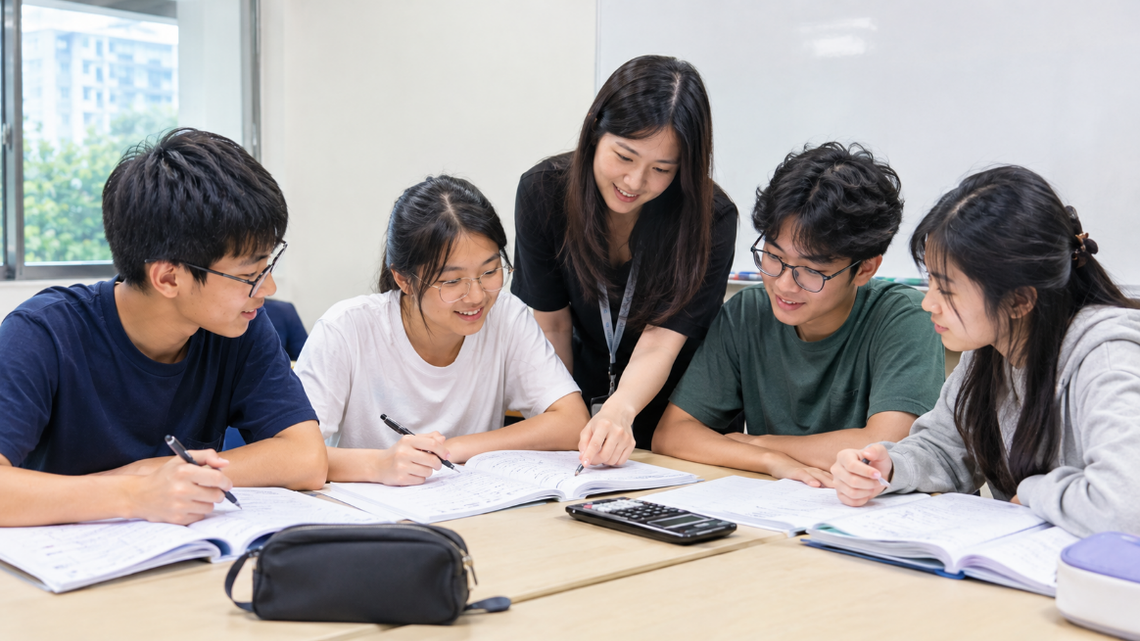
Chemistry can be a challenging subject for students, especially when complicated concepts, chemical equations and examination questions begin to feel overwhelming. The right Chemistry tuition can help students develop a stronger understanding of scientific principles, improve their problem-solving skills and approach examinations with greater confidence. Whether your child needs Secondary Chemistry tuition Singapore or is looking for A level chemistry tuition, a structured learning programme can provide the guidance and practice needed to overcome learning difficulties and make steady academic progress.
In Singapore, students face demanding academic expectations as they prepare for school assessments, the GCE O-Level examinations and the A-Level examinations. Chemistry requires more than memorising formulas and definitions. Students must understand how chemical reactions work, interpret experimental observations, apply mathematical concepts and explain their answers accurately.
Consequently, students who do not understand foundational concepts may find it increasingly difficult to keep up with their school lessons. However, struggling with Chemistry does not mean a student lacks ability. With suitable teaching methods, regular practice and personalised support, students can gradually build confidence and improve their understanding.
SmartLab Tuition Centre has been providing tuition since 1999. With an emphasis on activity-based learning, problem-solving and personalised academic support, SmartLab aims to help students develop essential skills and work towards their academic goals.
Whether your child is preparing for Secondary Chemistry examinations or tackling the more advanced H1 and H2 Chemistry syllabuses in Junior College, choosing an appropriate tuition programme can make learning more manageable. Read on to discover why students struggle with Chemistry, how effective tuition can help and what parents should consider when selecting a Chemistry tuition centre in Singapore.
Why Do Students Struggle with Chemistry in Singapore?
Chemistry is an interconnected subject. Students must understand fundamental concepts before applying them to increasingly complex problems. Therefore, when an important concept is unclear, subsequent topics can become more difficult.
Several common challenges explain why students may struggle with Chemistry.
1. Memorising concepts without understanding them
Many students attempt to memorise definitions, formulas, reaction conditions and chemical equations. Although memorisation has its place, it cannot replace genuine understanding.
For example, a student may remember a chemical formula but struggle to explain why a reaction occurs or predict the products of an unfamiliar reaction. Similarly, memorising a definition may not be sufficient when an examination question requires students to apply the concept to a new situation.
Effective Chemistry tuition encourages students to understand the reasoning behind scientific principles. As a result, they can apply their knowledge more confidently instead of relying entirely on memory.
2. Weak foundations in scientific concepts
Chemistry topics build on one another. Students who have difficulty understanding atomic structure, chemical bonding, formula writing or balancing equations may encounter further problems when studying more advanced material.
These gaps can become especially noticeable when students progress from lower secondary Science to upper secondary Chemistry.
Therefore, identifying weaknesses early is important. A structured tuition programme can revisit essential concepts, explain difficult material in simpler steps and provide opportunities for students to practise until they become more confident.
3. Difficulty applying knowledge to examination questions
Understanding a concept during a lesson does not automatically mean that a student can answer examination questions correctly.
Students may struggle to interpret command words, identify relevant information, select an appropriate method or explain their reasoning. Furthermore, unfamiliar question formats can make even familiar topics appear difficult.
Through guided practice, students can learn how to break down questions, identify what is being tested and construct accurate answers.
4. Losing marks through careless mistakes
Even students who understand Chemistry can lose marks because of avoidable errors.
These may include incorrect units, unbalanced equations, inappropriate significant figures, incomplete explanations or misinterpretation of experimental data.
Consequently, effective tuition should focus on accuracy as well as understanding. Regular feedback helps students recognise recurring mistakes and develop better examination habits.
How Chemistry Tuition Helps Students Improve Their Results
Good Chemistry tuition should do more than provide extra worksheets. It should help students understand the subject, identify weaknesses and develop the skills needed to answer questions independently.
Building a strong foundation in Chemistry
The first step towards improvement is understanding the concepts that underpin the syllabus.
For secondary school students, this may involve reviewing atomic structure, elements and compounds, chemical bonding, acids and bases, chemical equations and other topics relevant to their school syllabus.
For Junior College students, support may focus on chemical equilibrium, energetics, kinetics, electrochemistry and Organic Chemistry, depending on the applicable H1 or H2 syllabus.
By breaking difficult topics into manageable sections, tutors can help students understand how individual concepts connect.
Developing problem-solving skills
Chemistry questions often require students to apply several concepts together.
For instance, a calculation may involve interpreting information, selecting a suitable equation, converting units and presenting the answer correctly. Rather than memorising a fixed procedure, students should learn why each step is necessary.
Problem-based learning helps students practise these skills in a structured environment. Over time, they can become more independent when approaching unfamiliar questions.
Receiving personalised guidance
Every student has different strengths and weaknesses.
Some students need additional explanations, while others understand the concepts but struggle with examination technique. Similarly, students who are aiming for higher grades may need more challenging application questions.
Personalised support helps lessons focus on the student’s actual learning needs. In smaller classes, students may also have more opportunities to ask questions and receive feedback.
Preparing systematically for examinations
Examination preparation should begin well before the final revision period.
Students need time to understand concepts, practise different question formats, review mistakes and strengthen weaker topics. Therefore, a structured tuition programme can complement school lessons by providing additional practice and organised revision.
Although tuition cannot guarantee a particular grade, consistent learning and targeted practice can help students prepare more effectively.
Secondary Chemistry Tuition Singapore: Supporting Students from Secondary 1 to Secondary 4
Secondary school is an important stage for building scientific understanding. Students encounter new concepts, more detailed explanations and increasingly demanding examination questions as they progress through their studies.
Secondary Chemistry tuition Singapore programmes can support students at different stages by helping them develop the knowledge and skills required by their school syllabus.
Lower secondary Science: developing essential foundations
Before studying Chemistry as a separate subject, students encounter scientific concepts through lower secondary Science.
At this stage, students benefit from developing good observation skills, understanding scientific terminology and learning how to interpret information.
They should also become comfortable explaining scientific processes in their own words.
A strong foundation makes the transition to upper secondary Chemistry more manageable. Therefore, students who struggle with basic scientific concepts should address these difficulties before they accumulate.
Upper secondary Chemistry: mastering essential topics
Upper secondary Chemistry introduces more specialised concepts and requires students to apply their knowledge accurately.
Depending on the applicable syllabus, students may study topics such as chemical bonding, acids and bases, qualitative analysis, chemical calculations, energetics and organic compounds.
Each topic requires a different approach.
For example, chemical calculations demand accurate working and numerical reasoning. In contrast, qualitative analysis requires students to understand observations, tests and appropriate conclusions.
A good Chemistry tuition programme helps students practise each type of question while understanding the principles behind the answers.
Preparing for school tests and O-Level examinations
As examinations approach, students need a clear revision strategy.
Rather than revising topics randomly, they should identify weaker areas, review essential concepts and practise questions that reflect the assessment requirements.
O-Level Chemistry tuition can support this process through topic-based exercises, examination-style questions and feedback on common errors.
Students should also learn to manage their time and read questions carefully. In addition, reviewing incorrect answers can reveal patterns that require further attention.
The goal is not simply to complete more worksheets. Instead, students should understand their mistakes and learn how to avoid repeating them.
O-Level Chemistry Tuition Singapore: Preparing for Better Examination Performance
The O-Level Chemistry examinations require students to demonstrate both scientific understanding and the ability to apply knowledge accurately.
Students may need to interpret data, explain observations, perform calculations and answer structured questions using appropriate scientific terminology.
Therefore, effective O level chemistry tuition Singapore should address the specific demands of the student’s examination syllabus.
Understanding key Chemistry topics
Students should develop a clear understanding of the major topics covered by their syllabus.
For example, they should know how to write chemical formulas, balance equations, explain bonding, perform relevant calculations and interpret chemical reactions.
However, simply reading notes is rarely enough. Students need to practise applying the concepts to different question types.
A tutor can help identify misunderstandings and demonstrate a logical method for approaching difficult questions.
Improving structured-answer techniques
In Chemistry examinations, a correct idea may not receive full credit if the explanation is incomplete or scientifically inaccurate.
Students should therefore practise using precise terminology and presenting their reasoning clearly.
For instance, when explaining an experimental observation, they should distinguish between what they observe and the scientific explanation for that observation.
Regular feedback can help students understand what makes an answer complete and relevant.
Using practice papers effectively
Past examination papers and other suitable practice questions can help students become familiar with question formats and assessment demands.
Nevertheless, students should not focus solely on completing papers as quickly as possible.
After each exercise, they should review their answers, identify errors and revisit the relevant concepts. This process makes practice more meaningful.
For students who need additional support, Chemistry O-Level tuition can provide guidance throughout this process.
A-Level Chemistry Tuition: Helping JC Students Tackle Advanced Concepts
Chemistry becomes more demanding at the Junior College level. Students must understand concepts in greater depth and apply them to complex problems and unfamiliar situations.
A level chemistry tuition can be particularly useful for students who need help connecting theoretical knowledge with calculations, experimental evidence and examination techniques.
H1 Chemistry tuition
H1 Chemistry follows its own syllabus and assessment requirements. Students need to understand the prescribed concepts and apply them accurately.
Suitable tuition should align with the student’s examination syllabus and address the topics that require additional attention.
In addition, students benefit from regular practice and feedback on their explanations and calculations.
H2 Chemistry tuition Singapore
H2 Chemistry requires a deeper understanding of chemical principles and their applications.
Students may find topics such as chemical equilibrium, reaction kinetics, electrochemistry and Organic Chemistry particularly demanding.
For example, Organic Chemistry requires students to recognise functional groups, understand reaction pathways and apply knowledge of reagents and conditions. Memorising individual reactions without understanding their relationships can make revision unnecessarily difficult.
Effective H2 Chemistry tuition Singapore should help students organise these relationships and develop a logical approach to problem-solving.
Students should also practise interpreting experimental information, explaining chemical behaviour and presenting calculations accurately.
Improving A-Level examination techniques
A-Level questions may require students to combine knowledge from several topics.
Therefore, students should practise identifying the principles involved, selecting relevant information and explaining each step clearly.
Timed practice can help them manage examination conditions. Meanwhile, reviewing mistakes helps them identify whether their difficulties arise from conceptual gaps, calculation errors or incomplete explanations.
With consistent effort and suitable guidance, students can become better prepared to handle challenging questions.
What Makes the Best Chemistry Tuition in Singapore?
Parents searching for the Best Chemistry Tuition Singapore should compare teaching quality, programme suitability and the support available to their children.
No single tuition centre is automatically the best choice for every student. Instead, the right programme should match the student’s academic level, learning preferences and goals.
Experienced tutors who explain concepts clearly
A good tutor should be able to explain difficult scientific ideas in a way students can understand.
Rather than simply providing model answers, tutors should demonstrate the reasoning behind each solution. Students should also feel comfortable asking questions and discussing their mistakes.
When evaluating a tuition centre, parents can ask about the tutors’ qualifications, teaching experience and familiarity with the relevant syllabus.
Small classes and opportunities to ask questions
Smaller classes can create more opportunities for students to participate and receive feedback.
SmartLab Tuition Centre describes its customised classes as having a maximum of six students. This arrangement can support interaction between tutors and learners while allowing students to clarify difficult concepts.
However, parents should also consider teaching methods, lesson structure and the resources provided.
Activity-based and problem-based learning
SmartLab’s stated teaching approach emphasises activity-based and problem-based learning.
These methods encourage students to participate actively, apply scientific principles and develop critical-thinking skills.
For example, students can compare different ways to solve a calculation, discuss why a reaction occurs or analyse the results of an experiment.
Consequently, learning becomes more than memorising notes. Students gain opportunities to understand how Chemistry works and how to apply their knowledge.
Structured notes and regular practice
Useful learning resources may include concise notes, worked examples, topic-based exercises and examination-style questions.
Nevertheless, resources should complement teaching rather than replace it.
Students need feedback to understand why an answer is incorrect and how to improve. Regular practice, followed by review and correction, is an important part of effective learning.
A supportive learning environment
Students who struggle with Chemistry may lose confidence and become reluctant to ask questions.
A supportive environment can help them recognise that mistakes are part of the learning process.
When students receive constructive feedback and clear explanations, they can begin addressing their weaknesses more confidently.
Parents should therefore consider whether a tuition centre encourages participation, provides appropriate guidance and helps students develop independent study habits.
Why Consider SmartLab Tuition Centre for Chemistry Tuition?
SmartLab Tuition Centre has been providing tuition since 1999. Its programmes cover subjects including Mathematics, Science, General Paper and English.
For students seeking Chemistry tuition, SmartLab’s stated educational approach focuses on developing understanding, encouraging problem-solving and providing structured academic support.
A tuition provider with a long-standing history
SmartLab’s history dates back to 1999. Over the years, the centre has offered tuition programmes designed to support students at different stages of their education.
Parents can consider this experience alongside the suitability of the current Chemistry programme, tutor expertise and class arrangements.
Support across different academic levels
Students have different learning needs as they progress through school.
Secondary school students may need help strengthening their understanding of Chemistry fundamentals, while Junior College students may require more advanced conceptual explanations and examination practice.
When enquiring about tuition, parents should confirm which levels and syllabus-specific classes are currently available at their preferred branch.
Personalised attention and problem-solving
SmartLab emphasises activity-based and problem-based learning, with a focus on understanding concepts and strengthening analytical skills.
These principles are relevant to Chemistry because students must apply knowledge rather than simply reproduce memorised information.
A structured learning environment can help students work through difficult questions, clarify misunderstandings and practise their reasoning.
Convenient locations in Singapore
SmartLab operates in four locations, making it possible for families in different parts of Singapore to consider its programmes.
- Bishan: An option for students living or studying in the surrounding area.
- Kovan: Convenient for families in nearby neighbourhoods.
- Marine Parade: An option for students in Singapore’s eastern region.
- Woodlands: Convenient for families in the northern part of Singapore.
Parents should check the availability of specific Chemistry classes, schedules, fees and places before enrolling.
Chemistry Tuition Near Me: How to Choose the Right Tuition Centre
When searching for a Chemistry Tuition Centre Near Me, convenience is important. However, choosing a centre should involve more than finding the nearest location.
Consider the following factors before making a decision.
Check syllabus coverage
Ensure that the programme follows the appropriate syllabus for your child’s academic level.
For example, Secondary Chemistry, O-Level Chemistry and H2 Chemistry have different requirements. A programme should provide relevant content and practice for the student’s actual needs.
Ask about class size and teaching methods
Find out how lessons are conducted, how students receive feedback and whether they have opportunities to ask questions.
It is also helpful to understand how the tutor identifies weaknesses and adapts lessons to support students.
Compare schedules and fees
Tuition should fit the student’s weekly routine without leaving too little time for schoolwork, rest and independent revision.
Parents should request the latest fee information, lesson schedules and any additional material costs directly from the centre.
Look for evidence of learning progress
Rather than relying exclusively on marketing claims, ask how progress is monitored.
Useful indicators may include improved understanding, fewer recurring mistakes, stronger question-solving methods and more consistent preparation.
Although examination results are important, they should be considered alongside the student’s overall development and learning habits.
How Students Can Improve Their Chemistry Grades Outside Tuition
Tuition works best when students reinforce their learning independently.
Fortunately, a few consistent habits can make revision more organised and effective.
Develop a weekly revision routine
Students should set aside regular time to review concepts, practise questions and correct mistakes.
A manageable routine is often more effective than studying everything immediately before an examination.
For example, students can dedicate different sessions to reviewing notes, practising topic-based questions and revisiting challenging problems.
Keep a record of mistakes
An error log helps students identify recurring weaknesses.
Each entry should record the question topic, the mistake made and the correct reasoning. Over time, students can use this information to prioritise revision.
This method also helps them recognise whether their difficulties arise from misunderstandings, inaccurate calculations or incomplete explanations.
Practise explaining concepts in their own words
If students can explain a concept clearly without relying on their notes, they are more likely to understand it.
They can practise by summarising a topic, explaining a reaction or describing the steps in a calculation.
Furthermore, this approach reveals gaps that may not be obvious when simply reading a textbook.
Ask for clarification early
Students should not ignore concepts they do not understand.
Instead, they should seek help from their school teachers, tutors or other suitable educational resources. Addressing difficulties early can prevent them from affecting later topics.
Most importantly, students should remember that improvement takes time. Consistency, reflection and willingness to learn from mistakes are essential parts of academic progress.
Frequently Asked Questions About Chemistry Tuition in Singapore
1. Is Chemistry tuition necessary for secondary school students?
Chemistry tuition is not essential for every student. However, it may help students who struggle with scientific concepts, need additional practice or want more personalised guidance. The decision should depend on the student’s learning needs, progress and academic goals.
2. What is the best time to start O-Level Chemistry tuition?
Students can consider tuition when they begin struggling with important topics, experience difficulties in school assessments or need a more structured revision plan. Starting early gives them more time to address misunderstandings and practise examination questions before the O-Level examinations.
3. How is secondary Chemistry tuition different from JC Chemistry tuition?
Secondary Chemistry tuition focuses on the concepts and skills required by the relevant secondary school syllabus. JC Chemistry tuition covers more advanced concepts and applications, including the requirements of H1 or H2 Chemistry. Students should choose a programme that matches their academic level and examination syllabus.
4. How do I choose the best Chemistry tuition centre in Singapore?
Compare the centre’s teaching methods, tutor experience, class size, syllabus coverage, practice resources, feedback and location. It is also important to check the programme’s suitability for your child rather than relying solely on promotional claims or general reviews.
5. Does SmartLab Tuition Centre provide Chemistry tuition for different levels?
SmartLab offers tuition across different academic levels and subjects, including Science and Chemistry. Its centres are located in Bishan, Kovan, Marine Parade and Woodlands. Parents should contact the centre directly to confirm the current availability of Secondary Chemistry, O-Level Chemistry and JC Chemistry classes, as well as the applicable schedules and fees.
Conclusion: Take the Next Step Towards Better Chemistry Results
Struggling with Chemistry can be frustrating for students and worrying for parents. However, difficulties with chemical equations, calculations, scientific explanations or examination questions do not have to become permanent obstacles. With clear teaching, consistent practice, personalised guidance and effective revision habits, students can strengthen their foundations and develop greater confidence in the subject.
The right Chemistry tuition programme should help students understand concepts, recognise relationships between topics, solve problems systematically and prepare for examinations more effectively. In addition, a supportive learning environment can encourage students to ask questions, learn from mistakes and become more independent learners.
SmartLab Tuition Centre has been providing tuition since 1999 and emphasises activity-based learning, problem-solving and personalised academic support. With locations in Bishan, Kovan, Marine Parade and Woodlands, SmartLab provides families with several locations to consider when exploring suitable tuition options.
Give your child the opportunity to learn Chemistry with greater clarity and confidence. Contact SmartLab Tuition Centre to enquire about current programmes, class availability, schedules and fees. Whether your child needs help with foundational scientific concepts, O-Level examination preparation or advanced Junior College Chemistry, taking the first step towards suitable support can help make the learning journey more manageable. Explore the available options for Secondary Chemistry tuition Singapore and find a programme that matches your child’s academic needs and goals.